
In order of importance
- Existing damage comes first: an active leak or sagging deck needs attention before choosing between metal panels and asphalt shingles.
- Snow management comes next: metal needs a plan for sliding snow, while either covering needs sound drainage and protection beneath it.
- Replacement planning includes cost and upkeep: shingles generally cost less initially, while metal merits consideration for a longer ownership period.
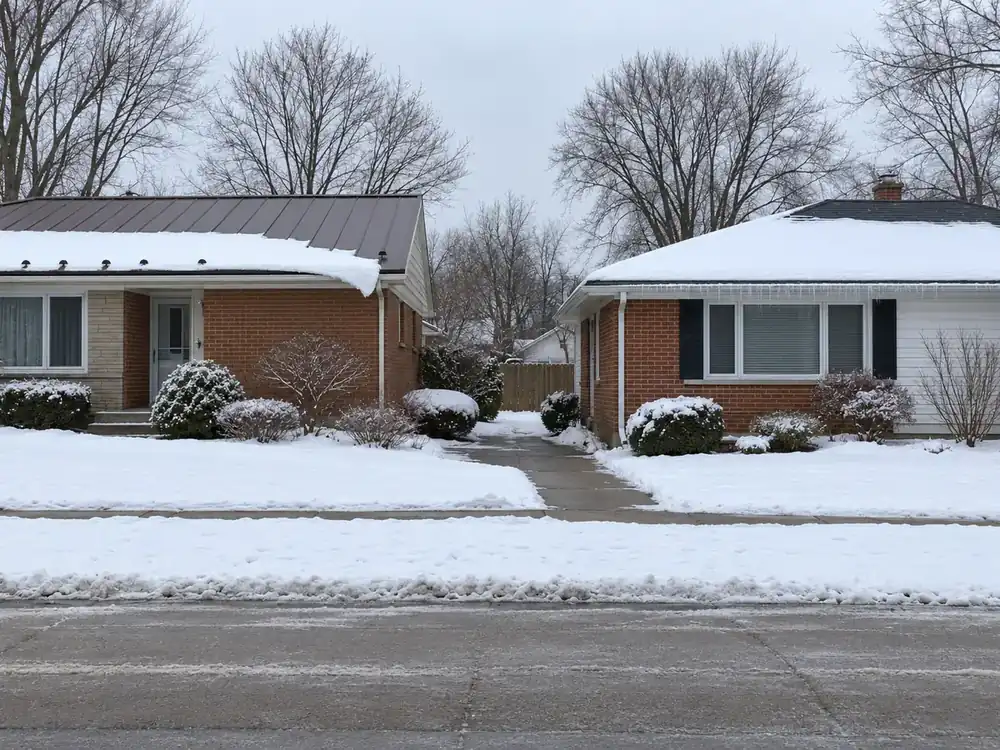
Roof Condition Comes Before the Material Choice
An active leak or weak deck takes priority over choosing a new roof covering. Metal and asphalt both need a sound base and carefully finished edges. Call about water entering, an open roof section or visible sagging first. Keep people out from under a bulging ceiling. Catch drips and move belongings only where safe. Switch off power to a wet ceiling fixture at the panel only if the panel is safe to reach. Stay off the roof, especially when it is wet, icy or snow-covered.
Snow and Ice Need a Complete Roof System
Snow retention and drainage belong in fix soon when ice builds at the eaves, and fix first when water enters. NWS Cleveland's January 14–15, 2026 account records lake-effect snow in the region, including a report near Mentor. Snow handling deserves a place in a Lake County replacement plan.
Snow can slide from metal in sheets, so doors, walkways and lower roofs need attention in the design. McElroy Metal's snow-retention discussion describes snow guards or fences for controlling that release. Asphalt's textured surface does not remove the need to address snow and drainage. Call about ice building above an entrance; don't chip it from the roof.
NWS guidance on ice dams explains how melting and refreezing can back water beneath shingles. Metal is not a substitute for attic heat control. Discuss insulation, ventilation and a compatible ice-and-water barrier beneath either proposed covering. Ice-barrier and underlayment details depend on the proposed roof system.
Loose Edges and Flashing Come Next
Loose roof edges and flashing belong in fix soon because openings can admit water. Local exposure is another factor in roof planning. For a home exposed to wind off Lake Erie, discuss the attachment details of the specific roof system. Either material depends on correct fastening and edge work. Call about lifted shingles or a loose panel rather than climbing up to test it.
Compare Replacement Choices After Repairs Are Sorted
Material selection belongs in plan for it once urgent defects have been addressed. Use the table to frame the call around the complete roof.
| Priority and factor | Metal roofing | Asphalt shingles |
|---|---|---|
| Fix first: wet or weak deck | Resolve damage before covering it | Resolve damage before new shingles |
| Fix soon: loose components | Check panel attachments and flashing | Check lifted tabs, boots and flashing |
| Plan for it: snow handling | Design snow retention above occupied areas | Address eaves, drainage and attic heat |
| Plan for it: appearance | Choose panel profile, seam spacing and finish | Choose shingle shape, texture and color |
| Plan for it: initial cost | Usually higher installation cost | Usually lower installation cost |
Comparing metal roofing cost vs shingles means including removal, deck repairs, flashings and snow retention in both scopes. One of our local roofing partners will explain the proposed work and its price so you can decide before installation starts. See the replacement cost factors for more detail.
Lifespan, Upkeep and Indoor Sound
Long service life and manageable upkeep are planning factors, not reasons to postpone a leak repair. How long does metal roofing last? McElroy Metal's residential FAQ describes a possible 40–60 years for metal and 12–20 for typical shingles. Those broad manufacturer figures are not a prediction for an individual roof.
Your roofer should explain checks for metal fasteners, seams and corrosion, or shingle cracking and granule loss. Metal still needs upkeep. The same McElroy FAQ explains that decking, insulation and underlayment reduce indoor rain noise; a house assembly differs from an open shed. Call to discuss the complete assembly if sound is a concern.
Appearance and Tear-Off Decisions
Roof shape, surrounding homes and existing layers help determine which replacement fits. Shingles offer a textured surface; standing-seam metal makes long vertical lines more prominent. Discuss physical samples and any property-specific exterior restrictions during planning.
Existing roofing conditions and layers affect whether a roof can be recovered or needs replacement. Manufacturer instructions also govern an approved recover. Call to discuss tear-off when hidden deck damage is a concern. Shingles may fit a tighter initial budget; metal may fit a longer ownership plan with room for its installation and snow-retention details.