From the First Symptom to Finished Work
Start With Water Entry or an Opening
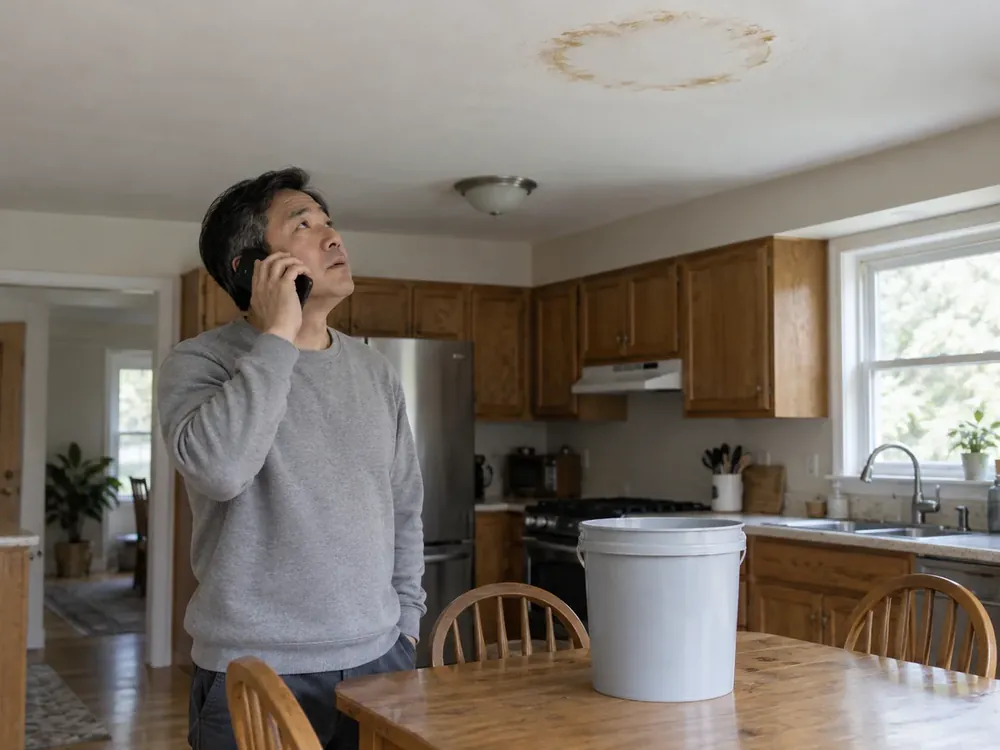
Calling starts the process, even if you don't know which part of the roof has failed. Say whether water is coming in now, whether a section appears uncovered or whether the roofline looks uneven. Those concerns belong in fix first because the building is already exposed or its support may be affected. Share where the drip or ceiling mark appears and whether the property is a house or business.
Loose shingle edges, a failed pipe boot or flashing pulling away belong in fix soon when the interior remains dry. Widespread wear without a leak belongs in plan for it. Describe those observations after immediate concerns. You don't need to identify the cause, measure the roof or gather records to make the call.
Keep the Affected Space Clear
Safe actions while waiting focus on people and belongings below the roof. Keep everyone away from a bulging ceiling or an area where material is falling. Catch drips with a container and move belongings only when the area is safe to approach. Leave the roof and its edges to your roofer. Ground-level observations are enough; roof access isn't part of preparing for a visit.
Call with changes in the symptom, including water appearing in another room or a ceiling beginning to bow. A dry mark that becomes an active drip changes the priority. You can explain the change without approaching the wet area or handling damaged material.
Find the Cause and Rank the Findings
Your roofer examines the covering, roof penetrations, junctions and accessible attic space to trace the problem. A ceiling mark shows where water appeared indoors, but the opening may be elsewhere on the slope. The assessment connects visible symptoms with the roof details responsible and checks for damage underneath.
Findings are separated into fix first, fix soon and plan for it. Active entry or a damaged deck leads the discussion. Smaller defects follow because leaving them unresolved can create another opening. General deterioration then shapes a repair or replacement decision. Call about the symptom now; the inspection supplies the detail needed to set those priorities.
Agree on the Scope and Check the Result
One of our local roofing partners describes the proposed scope and price before work starts. The discussion covers the affected area, materials, removal, underlying repairs and applicable permit steps. You hear which work addresses the immediate problem and which work can be planned separately. Changes found beneath old covering need an explanation before additional work is authorized.
Your roofer completes the agreed repairs or replacement, then checks the finished junctions, covering and work area. The closing conversation explains what was done and any remaining items by urgency. Keep the written scope with your property records so future decisions start with a clear account of the work.